
Yes, you can have a facelift and blepharoplasty at the same time. In fact, combining these procedures can be an effective way to achieve more comprehensive facial rejuvenation when aging affects both the lower face and the eye area.
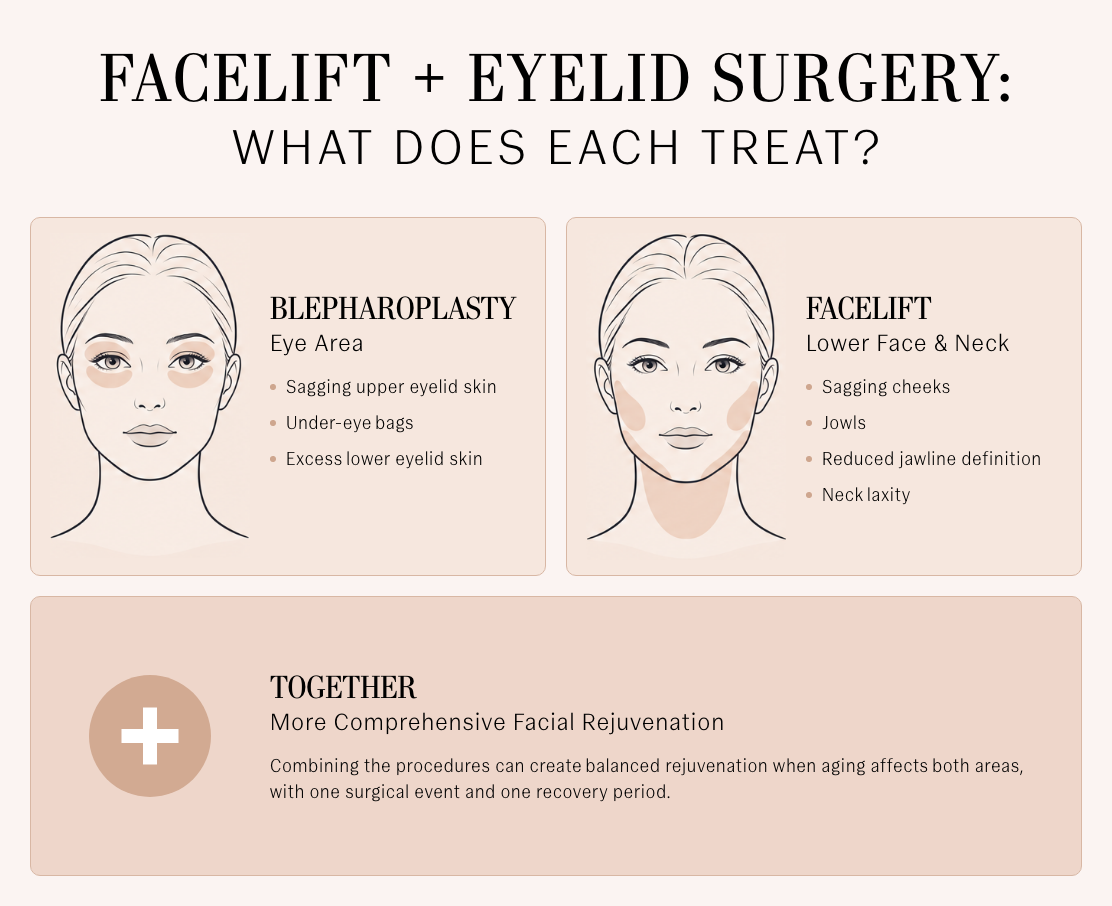
A facelift improves concerns such as sagging cheeks, jowls, reduced jawline definition, and neck laxity, while blepharoplasty (eyelid surgery) addresses aging around the upper and lower eyelids. When performed together, the procedures can create balanced, natural-looking rejuvenation.
What Does a Facelift Treat?
A facelift rejuvenates the mid-to-lower face, jawline, and neck by lifting and repositioning sagging facial tissues and redraping excess skin. It can improve several common signs of aging, including:
- Sagging cheeks
- Deepened folds around the mouth
- Jowls
- Reduced jawline definition
- Loose skin and other signs of aging in the neck
At St. Louis Cosmetic Surgery, our board-certified plastic surgeons perform full facelifts, deep plane facelifts, and mini facelifts, allowing them to select an approach based on each patient’s anatomy and degree of facial aging.


What Does Blepharoplasty Treat?
Blepharoplasty rejuvenates the eye area by addressing excess skin and other age-related changes of the upper eyelids, lower eyelids, or both.
Upper blepharoplasty removes sagging or excess skin that can make the eyes appear heavy or tired. Lower blepharoplasty can improve under-eye bags and excess skin beneath the eyes. When the upper and lower eyelids are treated on both eyes, the procedure is sometimes called quad blepharoplasty.
Eyelid surgery can make the eyes look more open and refreshed.


How Do the Procedures Complement Each Other?
Why Combine a Facelift With Blepharoplasty?
When both procedures are appropriate, combining them can offer several advantages:
- More comprehensive rejuvenation: A facelift improves the cheeks, lower face, jawline, and neck, while blepharoplasty refreshes the eye area.
- Balanced results: Treating areas that have aged together can help create a harmonious result rather than rejuvenating one region while leaving another unchanged.
- One surgical session: Combining the procedures avoids the need to schedule separate operations. When both would otherwise require general anesthesia, it also avoids a second general anesthetic.
- One recovery period: Swelling, bruising, activity restrictions, and time away from work and social activities can overlap rather than occurring during separate recoveries.
Your surgeon will weigh these advantages against the additional surgical time and your individual health considerations. The goal is to develop a personalized plan that addresses your concerns as safely, effectively, and cohesively as possible.
What Is Recovery Like After a Facelift and Blepharoplasty?
Swelling and bruising are expected in each treated area and are generally most noticeable during the first several days. At St. Louis Cosmetic Surgery, facelift patients typically plan for 1 to 2 weeks of downtime.
Blepharoplasty patients commonly feel comfortable returning to work and social activities about 10 to 14 days after surgery. When the procedures are combined, these early recovery periods largely overlap, but your specific downtime will depend on the extent of surgery and your individual healing.
Swelling and bruising gradually subside over the following weeks as healing progresses. Your surgeon will provide detailed postoperative instructions based on the procedures performed.
Who Is a Good Candidate for Combining the Procedures?
Combining a facelift with blepharoplasty may be a good option when aging affects both the eye area and the lower face and neck. Your surgeon will consider your overall health, medical history, anatomy, concerns, and the extent of surgery needed to determine whether performing both procedures during the same operation is appropriate for you.
Good candidates are healthy enough for surgery, have realistic expectations, and have concerns that can be improved by both procedures. For example, you might notice upper eyelid heaviness or under-eye bags along with sagging cheeks, jowls, reduced jawline definition, or neck laxity.
Not everyone benefits from combining procedures. If your concerns are concentrated around your eyes, blepharoplasty alone may provide the improvement you want. If aging primarily affects your lower face and neck, a facelift without eyelid surgery may be appropriate.
A brow lift may also be recommended when a lowered brow position contributes to heaviness around the eyes. A personalized evaluation can help determine which procedure or combination of procedures best addresses the underlying causes of your concerns and supports balanced, natural-looking results.
Take the Next Step
If you’re considering facial rejuvenation, the skilled plastic surgeons at St. Louis Cosmetic Surgery can develop a personalized surgical plan based on your anatomy, concerns, and goals.
To learn whether facelift surgery, blepharoplasty, or a combination of both is right for you, request a consultation online or call us at (636) 530-6161.
Leave a Reply